Interpretable Spectral Features Predict Conductivity in Self-Driving Labs
Principal Investigators: A. Amassian (NCSU), B. Ganapathysubramanian (ISU)
Funded by: ONR, NSF
Developed a Genetic Algorithm + Area-Under-Curve spectral featurization framework to predict polymer conductivity from optical spectra. Combined data-driven and expert-curated features into a hybrid QSPR model for self-driving labs.
Key Results:
- 85% predictive accuracyfor conductivity prediction
- 33% reduction in experimental time by replacing direct conductivity measurements
- Identified spectral fingerprints linked to aggregation, tail states, and doping
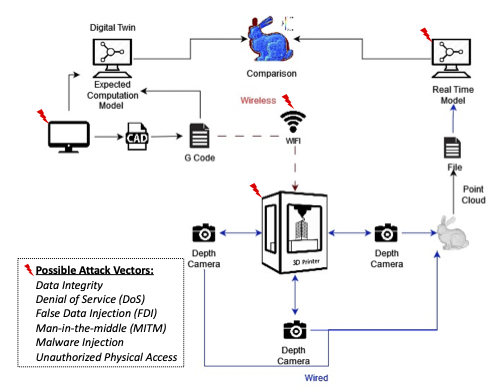
Real-Time 3D Reconstruction for Cybersecurity of Additive Manufacturing
Principal Investigators: B. Ganapathysubramanian (ISU), A. Krishnamurthy (ISU)
Funded by: NSF, OUSD(R&E)
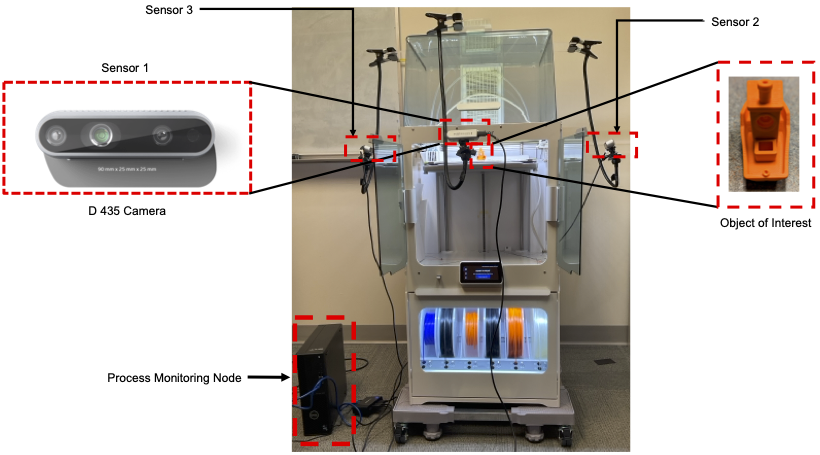
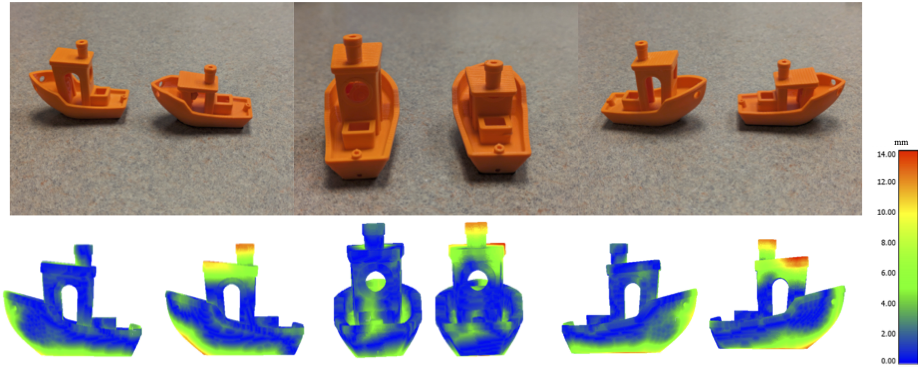
Developed a real-time monitoring framework for detecting cyber intrusions in 3D printing. Utilized low-cost depth sensors to reconstruct the printed object and compare it with a geometric twin, enabling rapid detection and halting of compromised prints.
Key Results:
- Successfully detected G-code alterations during printing
- Operates faster than the time to print a single layer
- Cost-effective solution with <$1000 in added hardware
Accelerating Structure–Property Mapping in Organic Photovoltaics
Principal Investigators: O. Wodo (SUNY Buffalo), B. Ganapathysubramanian (ISU)
Funded by: NSF, DoD MURI
Introduced a Bayesian-optimization-based framework to identify small, representative sub-domains (RVEs) of complex 3D OPV morphologies. This approach enables rapid structure–property mapping without simulating the entire morphology, dramatically reducing computational costs.
Key Results:
- Achieved ~400× reduction in computational effort
- Maintained <1% loss in accuracy of property prediction
- Identified multiple RVEs for robust property prediction
Reliability-Informed End-of-Use Decision Making for Product Sustainability
Principal Investigators: C. Hu (ISU, UConn), P. Wang (UIUC)
Funded by: NSF
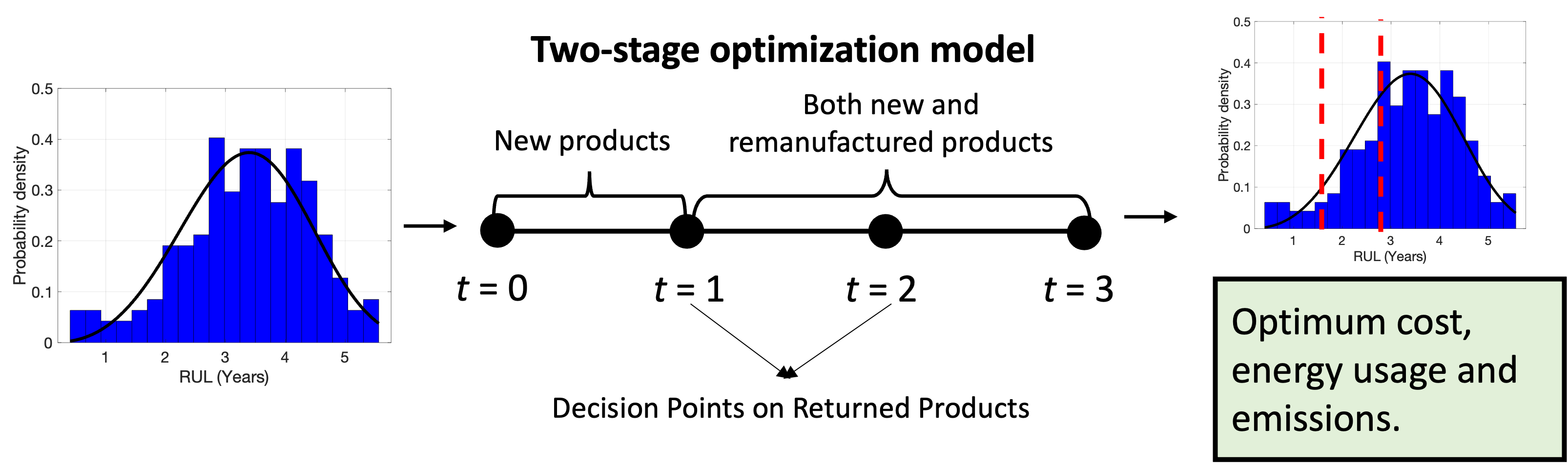
Developed a two-stage stochastic optimization framework to determine the optimal end-of-use (Re-X) decisions—reuse, remanufacturing, and recycling—based on product reliability and warranty information. This model links component reliability to demand uncertainty, enabling cost-effective, sustainable product lifecycle management in circular manufacturing systems.
Key Results:
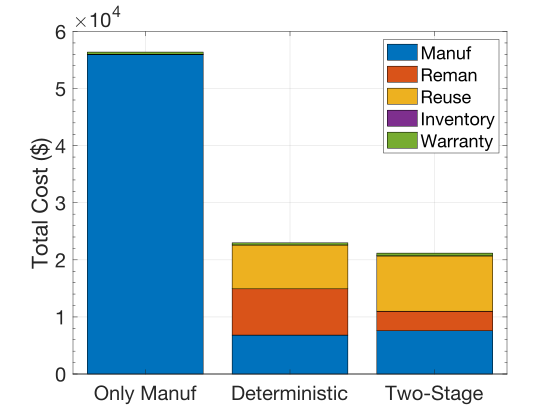
- Reduced total cost, energy use, and environmental impact by optimizing Re-X thresholds
- ~10% savings compared to deterministic approaches under uncertain demand
- Demonstrated with a case study of a hybrid manufacturing–remanufacturing product family
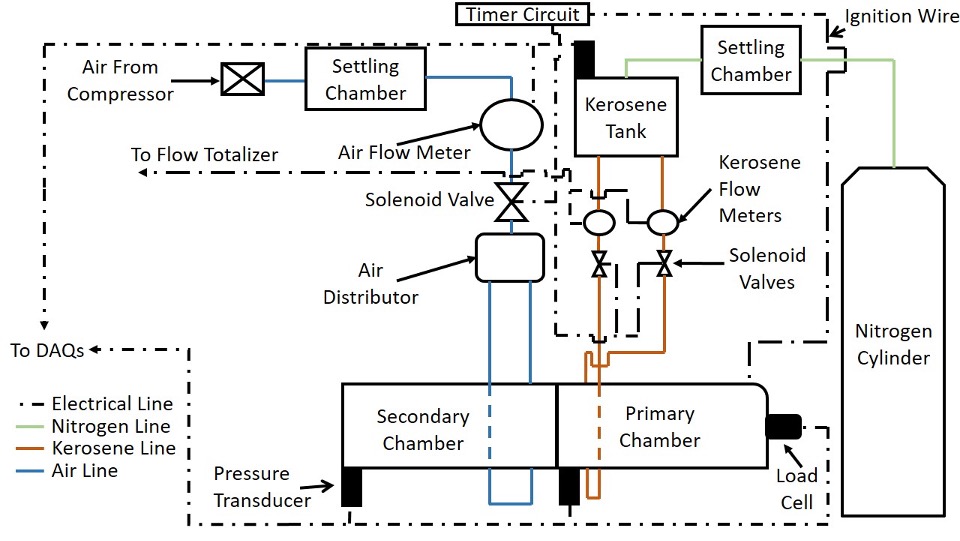
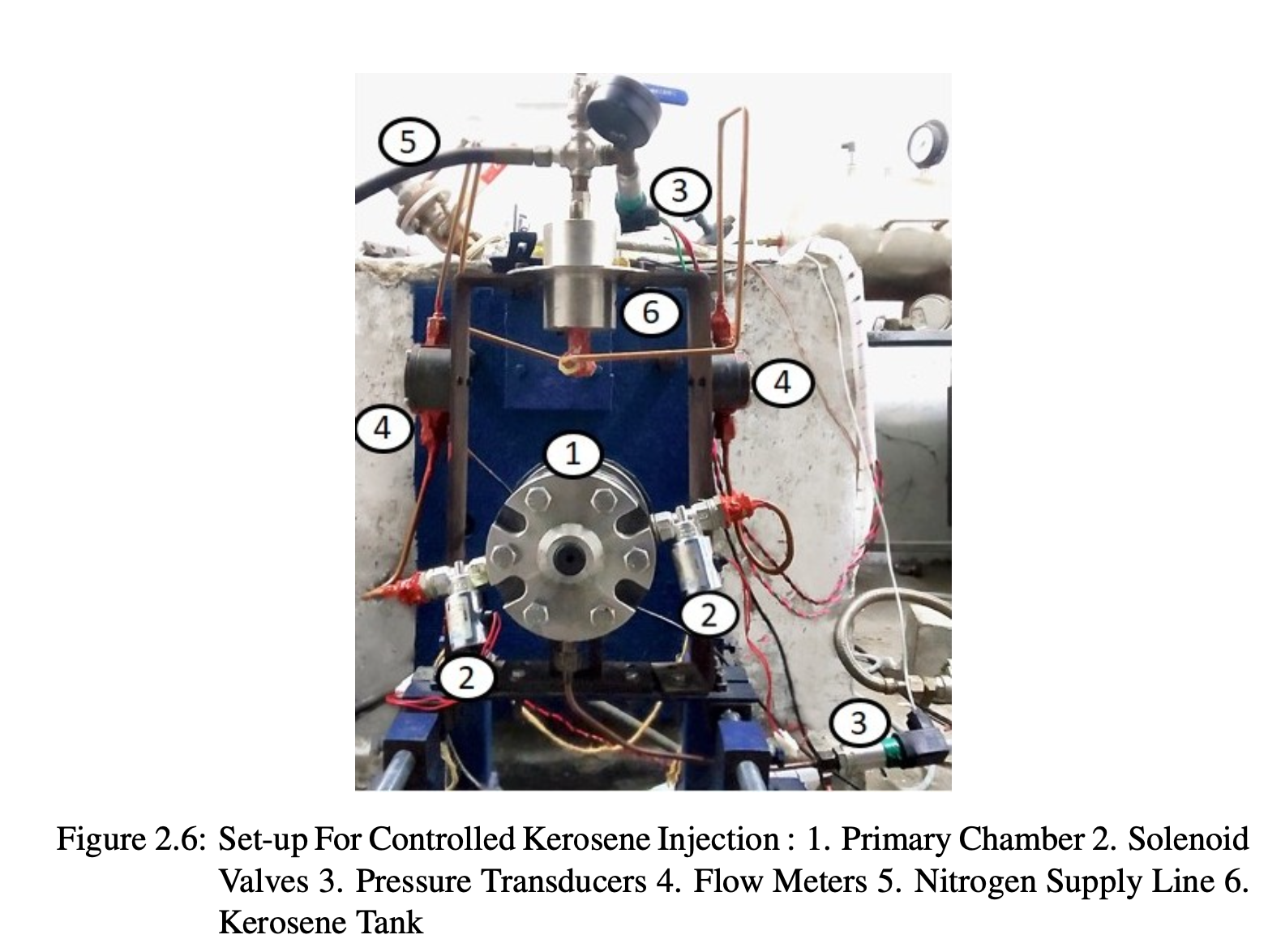
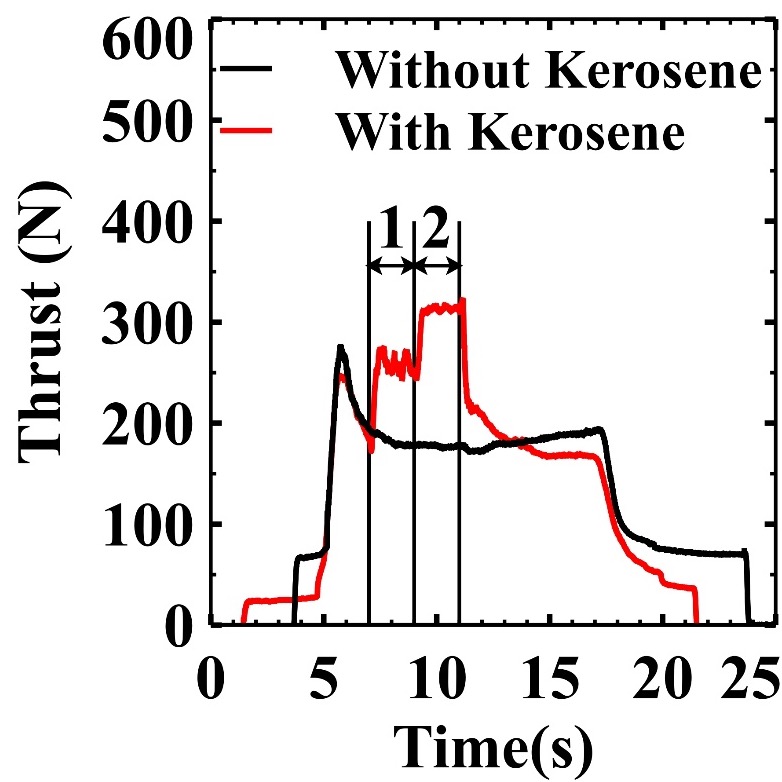
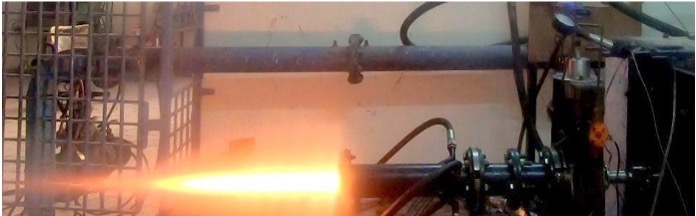
Master's Thesis: Throttling of a Fuel-Rich Propulsion System Using Controlled Kerosene Injection
Institution: IIT Madras (Department of Aerospace Engineering)
Advisor: Prof. P. A. Ramakrishna
Developed a novel experimental setup to demonstrate throttling and thrust modulation of a solid fuel-rich ramjet using secondary kerosene injection. The work focused on improving air-to-air missile performance through variable thrust control while maintaining the simplicity of solid fuel propulsion systems.
Key Results:
- Achieved 49% increase in chamber pressure with only 11% kerosene injection
- Demonstrated 73% thrust increase in dual-combustor mode ramjet tests
- Developed a high-density (1570 kg/m³), high-burn-rate fuel-rich propellant